
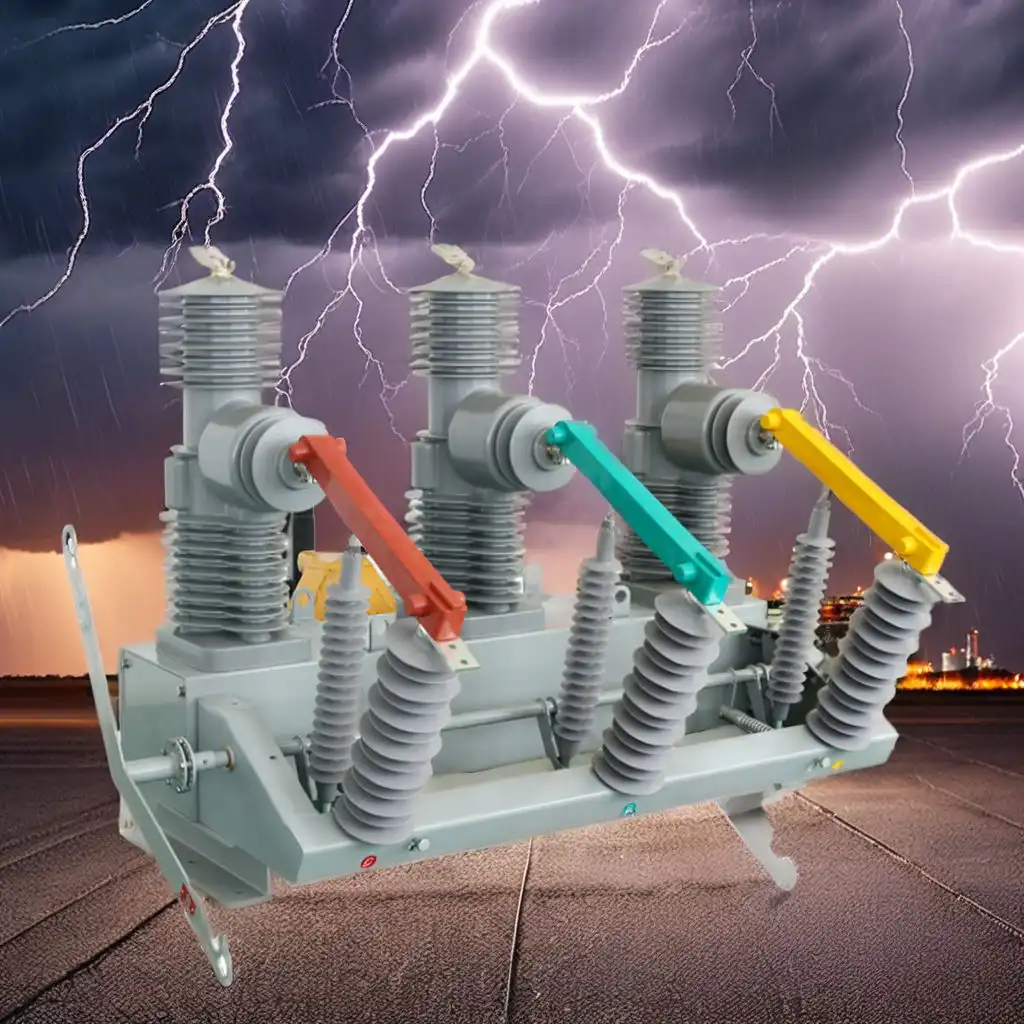
Electrical safety is a critical concern in industrial, commercial, and utility power systems. Faults such as short circuits and overloads can cause equipment damage, fire hazards, and serious safety risks. This is why the Vacuum circuit breaker has become the preferred solution for modern electrical protection. At Aierway, our vacuum circuit breakers are designed with safety as the highest priority.
Understanding the Vacuum Circuit Breaker
A vacuum circuit breaker is a medium-voltage protective device that interrupts current flow during abnormal electrical conditions. Unlike traditional breakers that use oil or air, vacuum circuit breakers extinguish the electrical arc inside a sealed vacuum chamber. This technology allows for fast, controlled arc interruption, significantly improving operational safety.
Superior Arc Extinguishing Capability
One of the primary reasons a vacuum circuit breaker is the safest option is its superior arc-quenching ability. When contacts separate, the arc formed is quickly extinguished in the vacuum environment. This prevents arc re-ignition and reduces the risk of explosions or fire, making vacuum circuit breakers ideal for high-risk environments.
Reduced Fire and Explosion Risk
Oil-filled circuit breakers carry inherent fire hazards due to flammable insulating materials. In contrast, a vacuum circuit breaker uses no oil or gas, drastically reducing fire and explosion risks. This oil-free design makes vacuum circuit breakers a safer and more environmentally friendly solution for electrical systems.
Reliable Performance During Fault Conditions
Safety depends on reliable operation during critical moments. A vacuum circuit breaker responds instantly to electrical faults, isolating the problem before it spreads through the system. This fast fault-clearing capability protects connected equipment and ensures the safety of personnel working near electrical installations.
Minimal Maintenance Enhances Safety
Poorly maintained equipment can become a safety hazard. Vacuum circuit breakers require minimal maintenance because the vacuum chamber protects contacts from oxidation and contamination. Fewer maintenance interventions reduce human error and exposure to live equipment, further enhancing the safety benefits of a vacuum circuit breaker.
Safe Operation in Harsh Environments
Industrial environments often involve dust, humidity, vibrations, and temperature variations. Vacuum circuit breakers are designed to operate safely under these harsh conditions. Their sealed design ensures consistent performance, making a vacuum circuit breaker a dependable safety solution for demanding applications.
Applications Where Safety Is Critical
Vacuum circuit breakers are widely used in applications where safety is non-negotiable, including:
- Industrial manufacturing plants
- Utility power distribution networks
- Renewable energy systems
- Hospitals, data centers, and critical infrastructure
In each of these environments, a vacuum circuit breaker provides reliable protection and minimizes safety risks.
Why Choose Aierway Vacuum Circuit Breakers?
At Aierway, safety is engineered into every vacuum circuit breaker we produce. Our products are designed to comply with international safety standards and undergo rigorous testing for fault interruption, durability, and reliability. With Aierway vacuum circuit breakers, you benefit from:
- Fast and safe fault interruption
- Long operational life with minimal risk
- Environmentally responsible, oil-free design
- Consistent performance under all conditions
Conclusion
When it comes to electrical protection, safety should never be compromised. The vacuum circuit breaker stands out as the safest choice due to its rapid arc extinguishing, low fire risk, minimal maintenance, and reliable fault performance. By choosing Aierway, you invest in vacuum circuit breakers that deliver unmatched safety, reliability, and peace of mind for modern electrical systems.