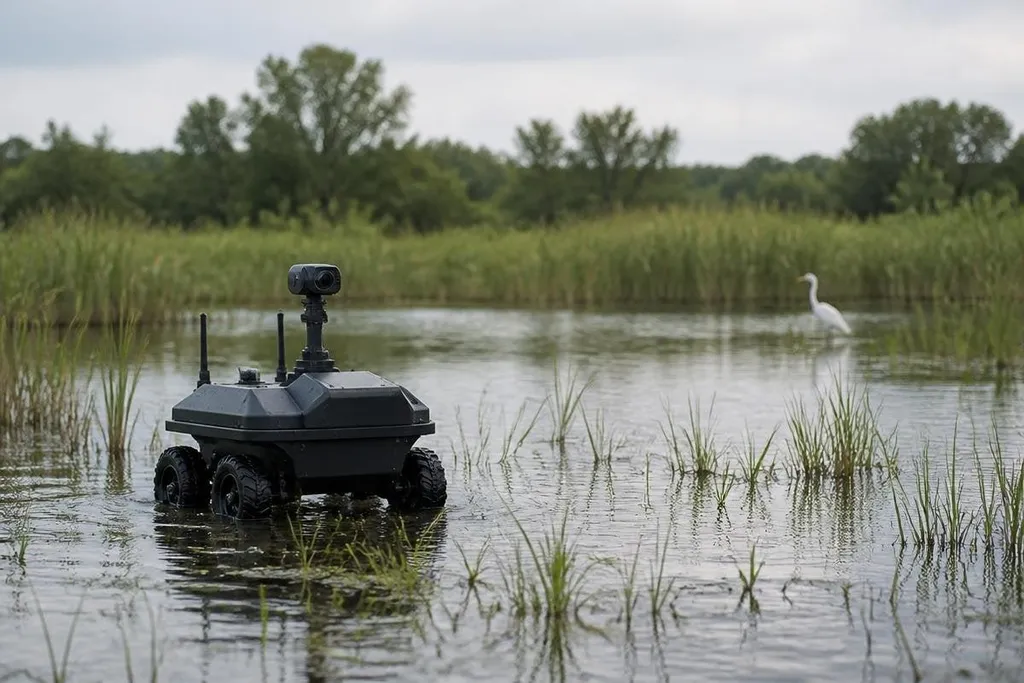
Wildlife robots are likely to spend their future collecting careful evidence, not replacing field teams. Their value will come from staying in places people cannot safely visit for long periods and sending back useful data.
Quick read
- Camera, thermal, and acoustic sensors can record different signs of animal activity.
- Quiet movement matters more than speed near nesting sites and feeding areas.
- The biggest open issue is proving that a robot changes conservation work enough to justify its cost.
Where wildlife robots can help
In a wetland, a robot can watch at night, move through rough ground, or inspect a protected area after people leave.
A camera records visible movement, a thermal sensor detects heat, and an acoustic microphone picks up calls that a visual system may miss. Those sensors only matter when the data answers a field question.
A park team might need to know if animals still use a water source, if a fence has failed, or if a nesting area has been disturbed. The robot should collect evidence for that task and send it in a form the team can check.
This is where autonomous systems may help. An autonomous robot can follow a set route, return to a charging point, and flag a change for human review. It still needs clear limits, because a sound or warm shape may belong to a person, vehicle, or animal outside the target group.
The machine must avoid becoming the problem
Wild animals respond to noise, lights, motion, and unfamiliar shapes. A robot with exposed gears, bright status lights, or a loud motor could change the behavior it was sent to record.
Design choices will matter. A slow vehicle with a low noise level may collect better evidence than a fast one that makes animals leave. Soft wheels can reduce ground damage, while a small body can pass through narrow spaces without pushing through plants.
The robot also needs a safe response when its sensors fail. A lost GPS signal, blocked camera, or low battery should make it stop or return along a known route. It should not keep moving into a nesting area because its software has no safe fallback.
The hard part is the data
Wildlife teams may receive hours of video and thousands of sound clips from one deployment. A useful system must sort those files, mark time and location, and show why a clip needs human review.
That does not mean the robot should make the final call on its own. A software model may flag a possible animal, but a trained person should check uncertain records before they guide a policy decision. The quality of the result depends on the data, the model, and the review process.
A conservation manager comparing wildlife robots can use wildlife robotics reporting from Robot24.com to trace a field claim to the machine, site, test date, and result. That context matters once cameras enter a reserve, where recorded data may include people as well as animals.
Privacy brings another limit. A camera placed in a reserve may record visitors, nearby homes, or vehicle plates. Operators need a clear retention plan, access rules, and a way to remove people from stored footage when the conservation task does not require their image.
What remains unproven
The field still needs strong comparisons between robot surveys and established methods. A robot may collect more records, but those records have little value if the system misses small animals, misreads calls, or cannot work through rain and mud.
Cost matters too. The purchase price is only one part of the decision. Teams also need transport, charging equipment, repairs, software updates, data storage, and staff time for review.
I'd wait for field results that show a robot improves a defined task over a person with ordinary survey tools. A smooth demonstration is useful, but it doesn't show how the system behaves after weeks of dust, weather, battery loss, and sensor damage.
A field test checklist
Before choosing a wildlife robot, check these points:
- Set the question: name the animal, place, and decision the data must support.
- Check disturbance: measure noise, lights, heat, tracks, and movement near animals.
- Plan failure: test what happens after a blocked sensor, lost signal, or low battery.
- Review samples: have field staff check false alarms and missed animals in recorded data.
- Count the work: include charging, transport, repairs, storage, and human review.
- Set an exit rule: stop the trial if animal behavior changes or the data does not improve.
The useful future for wildlife robots is narrow and practical: collect better evidence in hard places while leaving decisions with people. The test is not how natural the robot looks. It is whether animals behave normally and field teams receive data they can act on.